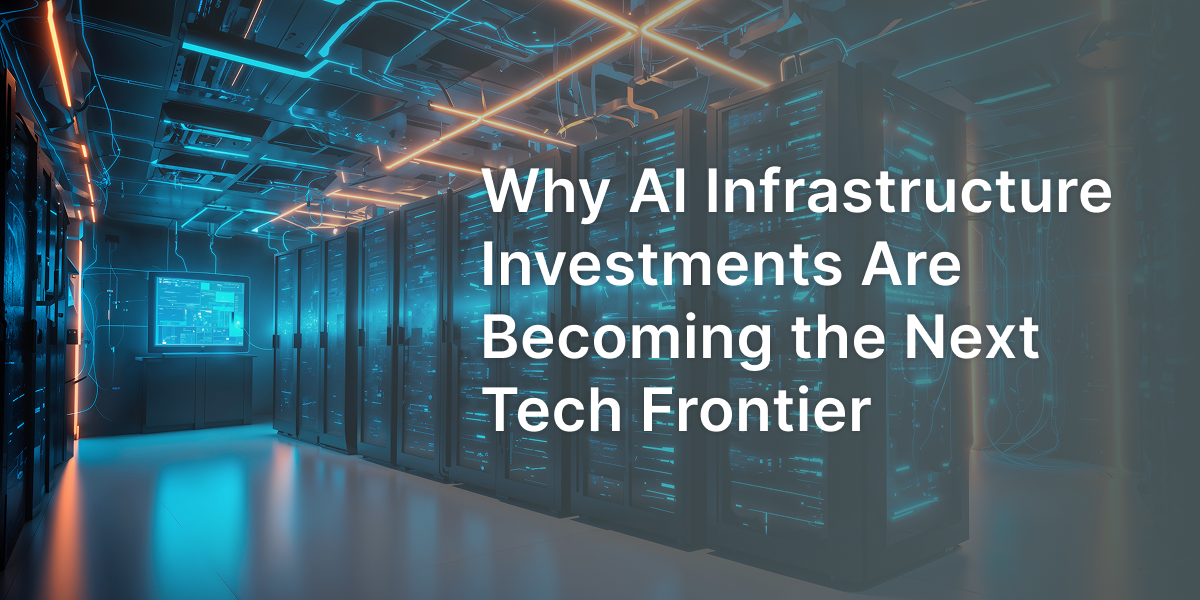
Artificial Intelligence is no longer just a software story it’s an infrastructure revolution. While much of the attention around AI focuses on chatbots, image generators and automation tools, the real transformation is happening deeper in the technology stack. The companies and countries investing in AI infrastructure today are laying the foundation for the next decade of innovation, economic growth and competitive advantage.
The Shift From Applications to Infrastructure
In the early days of AI, innovation centered around algorithms and applications. Startups raced to build smarter models, better recommendation engines and more accurate predictions. But as AI systems grow more complex and data-hungry, the bottleneck is no longer ideas it’s infrastructure.
Training modern AI models requires:
-
Massive computational power
-
High-performance data storage
-
Advanced networking systems
-
Scalable cloud environments
Without robust infrastructure, even the best AI models cannot function effectively. This has shifted investor attention toward the “picks and shovels” of the AI gold rush.
The GPU and Chip Boom
One of the most visible parts of AI infrastructure is specialized hardware. Graphics Processing Units (GPUs), once primarily used for gaming, are now the backbone of AI training and inference.
AI models process enormous amounts of data in parallel, something GPUs are uniquely suited for. As a result:
-
Demand for AI chips has surged globally
-
Semiconductor companies are seeing record investments
-
Nations are prioritizing chip manufacturing as a strategic asset
Beyond GPUs, custom AI accelerators and neural processing units are emerging, designed specifically to handle machine learning workloads more efficiently.
Data Centers Are Becoming AI Factories
Traditional data centers were built for storage and general cloud computing. AI changes that equation.
Modern AI data centers must support:
-
Extreme power consumption
-
Advanced cooling systems
-
High-speed interconnects between thousands of processors
These facilities are no longer just server rooms they are industrial-scale AI factories. Hyperscalers and cloud providers are investing billions to expand AI ready data center capacity, often partnering with energy providers to secure sustainable power sources.
Cloud Providers as AI Infrastructure Giants
Cloud platforms are rapidly evolving into AI infrastructure platforms. Instead of just offering virtual machines and storage, they now provide:
-
AI-optimized hardware instances
-
Prebuilt machine learning environments
-
Scalable training and deployment pipelines
This lowers the barrier to entry for startups and enterprises, allowing them to build AI products without owning physical infrastructure. As a result, cloud providers are becoming central players in the AI economy.
The Data Layer: Storage and Movement
AI doesn’t just need compute it needs data and lots of it.
Organizations are investing heavily in:
-
Distributed storage systems
-
Real-time data pipelines
-
High-bandwidth networking
The faster data can move between storage and compute systems, the more efficiently AI models can be trained and deployed. This has made data engineering and infrastructure just as important as model development.
Energy: The Hidden AI Infrastructure Challenge
AI infrastructure comes with a major energy cost. Training large models can consume as much power as small towns. This has pushed energy efficiency and sustainability to the forefront.
We’re now seeing:
-
Investment in renewable-powered data centers
-
Research into energy-efficient AI chips
-
Smarter workload scheduling to reduce power waste
Energy is quickly becoming a strategic component of AI infrastructure planning.
Why Investors Are Paying Attention
AI applications may capture headlines, but infrastructure offers long-term, stable growth. Companies that provide the backbone of AI chips, cloud platforms, data systems and networking stand to benefit regardless of which AI applications win.
This makes AI infrastructure attractive because:
-
It supports every AI use case
-
It creates high barriers to entry
-
It generates recurring demand as AI adoption grows
In many ways, AI infrastructure plays the same role that internet infrastructure did during the early web era.
The Next Decade of AI Will Be Built on Infrastructure
As AI becomes embedded in healthcare, finance, education, manufacturing, and government, the need for powerful, scalable infrastructure will only intensify.
The real competitive edge will belong to those who control or have access to:
-
Advanced computing resources
-
Reliable and scalable data systems
-
Efficient, sustainable energy for AI workloads
AI innovation may start with algorithms, but its future depends on infrastructure. That’s why investments in AI infrastructure are not just a trend they are becoming the next great tech frontier.